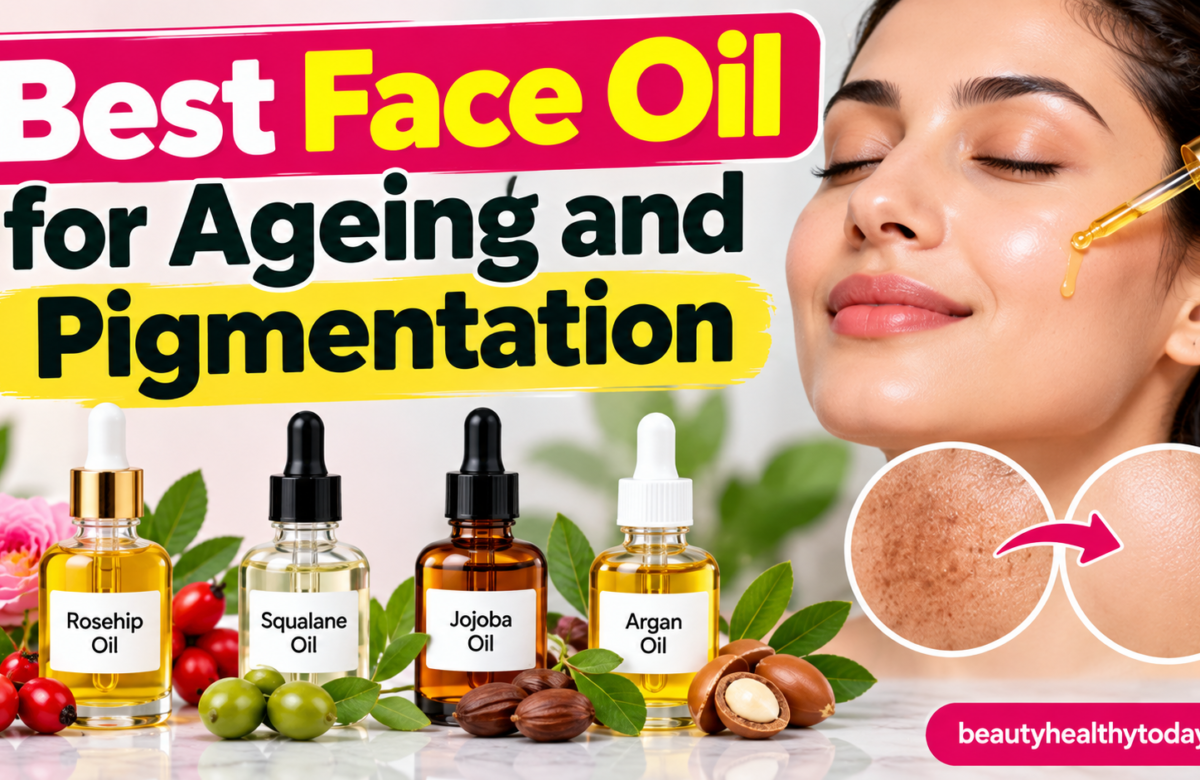
Choosing the best face oil for ageing and pigmentation can feel confusing, especially when so many products promise glowing skin, fewer wrinkles, and lighter dark spots. Rosehip oil, squalane, jojoba oil, and argan oil are popular options, but each offers different benefits.
The right choice depends on your skin type and your main concern. If your skin feels dry, looks dull, or has fine lines, a suitable face oil may help improve softness and make your skin look smoother. However, if you want to reduce pigmentation, you may need targeted skincare ingredients alongside daily sun protection.
In this guide, we compare popular face oils, explain their benefits and limitations, and help you choose an option that fits your skincare routine.
Which Is the Best Face Oil for Ageing and Pigmentation?
Table of Contents
Rosehip seed oil is a reasonable option to consider if you want a nourishing facial oil for dry, mature-looking skin. It contains essential fatty acids and other naturally occurring compounds that can support skin conditioning. However, strong clinical evidence that rosehip oil alone removes pigmentation or wrinkles is limited.
For people mainly concerned about dryness and a weakened skin barrier, squalane or jojoba oil may be more suitable. For stubborn dark spots, a skincare product containing a proven brightening ingredient is generally a better choice than relying on a plain facial oil.
5 Best Face Oils to Consider
1. Rosehip Seed Oil — For Dry, Dull, Mature-Looking Skin
Rosehip seed oil is extracted from the seeds of rose plants. It contains essential fatty acids, including linoleic acid and alpha-linolenic acid, and is commonly used in skincare products designed to nourish dry skin.
Potential benefits:
- Helps soften dry, rough skin.
- Supports the skin’s moisture barrier.
- May improve the appearance of dullness by conditioning the skin.
- Can be used as an additional moisturising step in a skincare routine.
Does rosehip oil remove pigmentation?
Rosehip oil is often promoted for dark spots and uneven skin tone, but the evidence that the oil itself significantly fades pigmentation is limited. It should not replace sunscreen or targeted treatments.
Best suited for: People with dry or normal skin who want an additional nourishing product.
How to use it: Apply two or three drops to clean skin, preferably after a water-based serum and before or after moisturiser, depending on the product instructions and your skin’s needs.
The Cleveland Clinic explains that rosehip oil contains nutrients and fatty acids that may support skin conditioning, while also noting the importance of using it appropriately.
2. Squalane Oil — For Hydration and a Smoother Appearance
Squalane is a lightweight emollient used in skincare to help soften the skin and reduce moisture loss. It is different from squalene, the naturally occurring lipid found in human skin, because squalane is a more stable form used in cosmetic formulations.
Potential benefits:
- Helps soften dry or rough skin.
- Supports moisture retention.
- Can make fine lines caused by dehydration look less noticeable.
- Often feels lighter than rich facial oils.
Squalane does not directly remove pigmentation. Its main role is to improve skin comfort and hydration, which can be particularly helpful when your skin feels tight or dry.
Best suited for: People looking for a lightweight moisturising oil, including some with combination skin.
How to use it: Apply a few drops after your serum or mix a small amount with your moisturiser if the product instructions allow it.
3. Jojoba Oil — For Softness and Moisture Support
Jojoba oil is widely used in facial skincare because its wax esters resemble some of the lipids naturally present in skin. It helps condition the skin and reduce the feeling of dryness.
Potential benefits:
- Softens rough skin.
- Helps maintain moisture.
- Can make dry skin feel more comfortable.
- Adds a smooth finish to a skincare routine.
Jojoba oil is not a proven treatment for age spots, melasma, or other forms of hyperpigmentation. People with oily or acne-prone skin should introduce it cautiously because individual reactions vary.
Best suited for: Normal, dry, or combination skin that tolerates facial oils.
How to use it: Start with one or two drops at night and observe how your skin responds.
4. Argan Oil — For Dryness and Skin Conditioning
Argan oil is derived from the kernels of the argan tree. It contains fatty acids and vitamin E-related compounds and is commonly used in moisturising skincare products.
Potential benefits:
- Helps soften dry skin.
- Adds conditioning and a healthy-looking finish.
- May help reduce roughness caused by dryness.
- Can complement a routine focused on maintaining skin moisture.
Although argan oil has useful moisturising properties, it should not be considered a stand-alone treatment for pigmentation or established wrinkles.
Best suited for: People with dry skin who prefer a richer facial oil.
How to use it: Begin with a small amount at night. If it feels too heavy or causes breakouts, discontinue use.
5. Evening Primrose Oil — For Dry or Uncomfortable Skin
Evening primrose oil is rich in linoleic acid and contains gamma-linolenic acid. It appears in some skincare products formulated to condition and moisturise the skin.
Potential benefits:
- Helps soften dry skin.
- May support the skin’s lipid barrier when used in an appropriate formulation.
- Can be an option for people who prefer oils designed for dry skin.
Evidence for its effectiveness as a facial treatment for pigmentation and visible ageing remains limited. It is better viewed as a moisturising ingredient than as a dark-spot treatment.
Best suited for: People whose main concern is dryness rather than pigmentation.
How to use it: Choose a facial product intended for topical use and follow its label. Do not assume that an oil sold as a dietary supplement is suitable for direct application to the face.
Comparison: Which Face Oil Should You Choose?
| Face oil | Main potential benefit | Best starting point | Pigmentation evidence |
|---|---|---|---|
| Rosehip seed oil | Nourishing and conditioning | Dry or normal skin | Limited evidence for the oil alone |
| Squalane | Lightweight moisture support | Skin needing a lighter oil | Not an established pigmentation treatment |
| Jojoba oil | Softness and conditioning | Normal or dry skin | Not an established pigmentation treatment |
| Argan oil | Richer moisturising support | Dry skin | Not an established pigmentation treatment |
| Evening primrose oil | Skin conditioning | Dry skin | Limited evidence for topical use |
These are general comparisons, not a clinical ranking. The best option depends on your skin’s tolerance and the rest of your skincare routine.
What Actually Helps with Ageing and Pigmentation?
If your main concern is dark spots, uneven skin tone, fine lines, or sun-related ageing, choosing the right active ingredients is important.
Vitamin C for Dark Spots and Uneven Skin Tone
Vitamin C is an antioxidant used in skincare products designed to improve the appearance of dark spots and uneven skin tone. It may also help address some visible signs of sun-related skin ageing.
Look for a well-formulated vitamin C serum or cream rather than assuming that any facial oil containing a small amount of vitamin C will deliver the same benefits.
Retinol for Fine Lines and Uneven Texture
Retinol is a type of retinoid used to improve the appearance of fine lines, uneven texture, and some pigmentation concerns. It can irritate the skin, particularly when first introduced, so begin cautiously and avoid combining too many potentially irritating products at once.
Retinoids should not be used during pregnancy. If you are breastfeeding, consult your healthcare professional before starting a retinoid product.
Niacinamide for Uneven Skin Tone
Niacinamide is used in skincare products to support the skin barrier and help improve the appearance of uneven skin tone. It may be an option for people who want a targeted ingredient without immediately starting a stronger retinoid.
Sunscreen to Help Prevent Further Dark Spots
Daily sunscreen is essential when managing pigmentation and visible ageing. Choose a broad-spectrum sunscreen with SPF 30 or higher, and reapply as directed, especially during outdoor exposure.
For pigmentation concerns, a tinted sunscreen containing iron oxides may provide additional protection against visible light. The American Academy of Dermatology discusses sunscreen and targeted ingredients as important parts of dark-spot management.
A Simple Skincare Routine for Ageing and Pigmentation
You do not need to use every oil and active ingredient at once. A consistent, simple routine is a better starting point.
Morning routine
- Wash your face with a gentle cleanser.
- Apply a vitamin C or niacinamide product if suitable for your skin.
- Use a moisturiser.
- Apply broad-spectrum SPF 30 or higher sunscreen.
Night routine
- Cleanse your face gently.
- Apply one targeted treatment, if appropriate for your skin.
- Use a moisturiser.
- Apply one or two drops of facial oil if your skin needs extra moisture.
If you use retinol, introduce it gradually and follow the product instructions. A face oil can complement your routine, but it does not replace your targeted treatment or sunscreen.
How to Choose the Right Face Oil for Your Skin Type
For dry skin: Rosehip, argan, or jojoba oil may help condition the skin. You may still need a moisturiser to provide sufficient hydration.
For oily skin: Consider a lightweight product such as squalane, introduce it slowly, and stop if breakouts develop. You may not need a face oil at all.
For sensitive skin: Choose a simple, fragrance-free product and avoid essential oils or heavily fragranced blends. Patch-test before applying it widely.
For acne-prone skin: Be cautious with facial oils because some formulations may worsen breakouts. A non-comedogenic moisturiser may be a better option.
For pigmentation: Prioritise sunscreen and targeted ingredients such as vitamin C, niacinamide, or a suitable retinoid rather than expecting a plain oil to fade dark spots.
Common Mistakes to Avoid
- Expecting a face oil to erase age spots or deep pigmentation.
- Skipping sunscreen while using products intended to improve uneven skin tone.
- Applying large amounts of oil when a few drops would be sufficient.
- Using several new active ingredients simultaneously.
- Continuing a product that causes burning, persistent redness, itching, or breakouts.
- Applying essential oils directly to the skin without appropriate formulation and dilution.
If a dark spot changes shape or colour, bleeds, or does not look like your other spots, arrange a medical assessment rather than treating it as a cosmetic concern.
Frequently Asked Questions
Which is the best face oil for ageing and pigmentation?
Rosehip seed oil is a reasonable option for nourishing dry, mature-looking skin, but there is limited evidence that it independently treats pigmentation. For dark spots, sunscreen and targeted ingredients such as vitamin C or suitable retinoids have stronger supporting evidence.
Can face oil remove dark spots permanently?
No face oil can be guaranteed to remove dark spots permanently. Pigmentation can return, particularly with continued sun exposure. The correct treatment depends on whether the cause is melasma, post-inflammatory pigmentation, sun damage, or another skin condition.
Is rosehip oil better than vitamin C for pigmentation?
They serve different purposes. Rosehip oil mainly acts as a conditioning oil, while vitamin C is a targeted skincare ingredient with evidence supporting its use for uneven skin tone and certain signs of photoageing. Neither works identically for every person.
Can I use face oil every day?
Many people can use a suitable facial oil daily, but frequency depends on skin type, formulation, and tolerance. Start with a small amount and stop if irritation or breakouts develop.
How long does it take to improve pigmentation?
Results vary with the type and depth of pigmentation and the treatment used. Some dark marks fade over months, while melasma and deeper pigmentation can be persistent. Consistent sun protection and an appropriate treatment plan are important.
Should I apply face oil before or after moisturiser?
A common approach is to apply water-based products first, followed by moisturiser and then a small amount of oil to help reduce moisture loss. However, product formulations differ, so follow the label and adjust the order if your skincare professional recommends it.
Final Verdict
The best face oil for ageing and pigmentation depends on what your skin needs. Rosehip seed oil may be worth considering for dry, dull skin; squalane can provide lightweight conditioning; and jojoba or argan oil may suit people who need more moisture.
However, if fading dark spots is your main goal, do not rely on facial oils alone. Combine a suitable skincare routine with daily sun protection, and consider targeted ingredients with stronger evidence. If pigmentation is persistent, worsening, or difficult to identify, a dermatologist can help determine its cause and recommend an appropriate treatment.
Medical disclaimer: This article provides general skincare information and is not a substitute for professional medical advice or diagnosis. Consult a dermatologist before starting treatment for persistent pigmentation or significant skin irritation.